The 2 mm radius head sits on a 6 mm neck, so the cutter can go deeper than its head diameter suggests. That geometry is what reaches undercuts and radiused internal walls a ball-nose cannot enter.
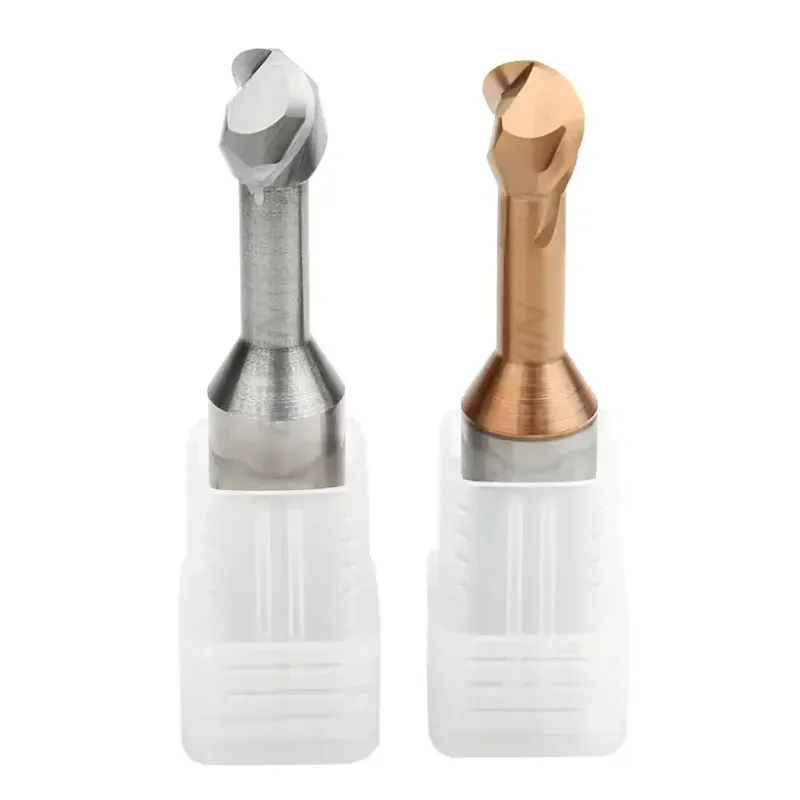 FIG. / PRODUCT VISUAL / 3 VIEWS
Product images are shown for technical review; final compatibility is confirmed before quotation.
TBK-END-1600832431329
R2 lollipop cutter HRC55
A lollipop cutter recorded as model R2*D2*6*4d*50L in the 55 HRC grade, two flutes, with cutting-edge lengths of 10, 12, 16 and 20 mm. The spherical head reaches undercuts and radiused walls that a standard ball-nose cannot enter at the same overhang.
- Model numberR2*D2*6*4d*50L HRC55
- Head radiusR2 (2 mm)
- Flutes2
- Hardness45 HRC / 55 HRC
- Cutting edge length10 / 12 / 16 / 20 mm
| Model number | R2*D2*6*4d*50L HRC55 |
|---|---|
| Head radius | R2 (2 mm) |
| Flutes | 2 |
| Hardness | 45 HRC / 55 HRC |
| Cutting edge length | 10 / 12 / 16 / 20 mm |
| Coating options | AlTiN, TiN, TiSiN, uncoated |
| Cutting direction | Climb milling |
| Workpiece materials | Stainless steel, alloy steel, cast iron, copper |
APPLICATION CHECKCNC milling machine and machining-center applicationsConfirm machine model, interface and drawing before order.
Request this part Ask about an alternativePRODUCT DETAILTECHNICAL INFORMATION
HOW TO READ THE NUMBERSR2 with a 6 mm neck Cutting edge 10–20 mm 2 flutes
Four edge lengths are listed against one model number. The edge length sets how deep the lollipop can cut before the neck rubs, so it has to be chosen per pocket rather than ordered at random.
Two flutes give chip room without weakening the small head. In stainless steel that matters more than flute count elsewhere, because a loaded chip recuts and work-hardens the surface.
WHERE IT DOES NOT FIT
A lollipop cutter is a finishing tool for undercuts and radiused walls; it is not presented for heavy stock removal, and the neck is the weak point under side load. Copper is listed as a workpiece, but a two-flute geometry at this radius will need light feeds in gummy material.
WHAT THIS RECORD ANSWERS
45 HRC or 55 HRC?
Both grades are listed against the model number, which carries HRC55. The grade must be fixed on the order.
Which edge length do I need?
It depends on the depth of the undercut. The neck rubs once the cut is deeper than the edge, so measure the wall before choosing between 10, 16 and 20 mm.
Can it cut a full radius in one pass?
The record gives no step-over or depth-of-cut figure. On a 2 mm radius head, take it in light passes and confirm by test cut.
SPECIFICATION INPUT
Exact fit starts with the machine.
Specifications are listed with the part. Confirm machine model, interface, material and drawing before quotation.
INPUT / 2D + 3D DRAWINGCHECK / INTERFACE + MATERIALOUTPUT / QUOTATION ROUTE