The 250 in the model is the only size marker recorded. If you are choosing between this and the DYV-6-300, the record gives you no dimension that separates them — only the model number.
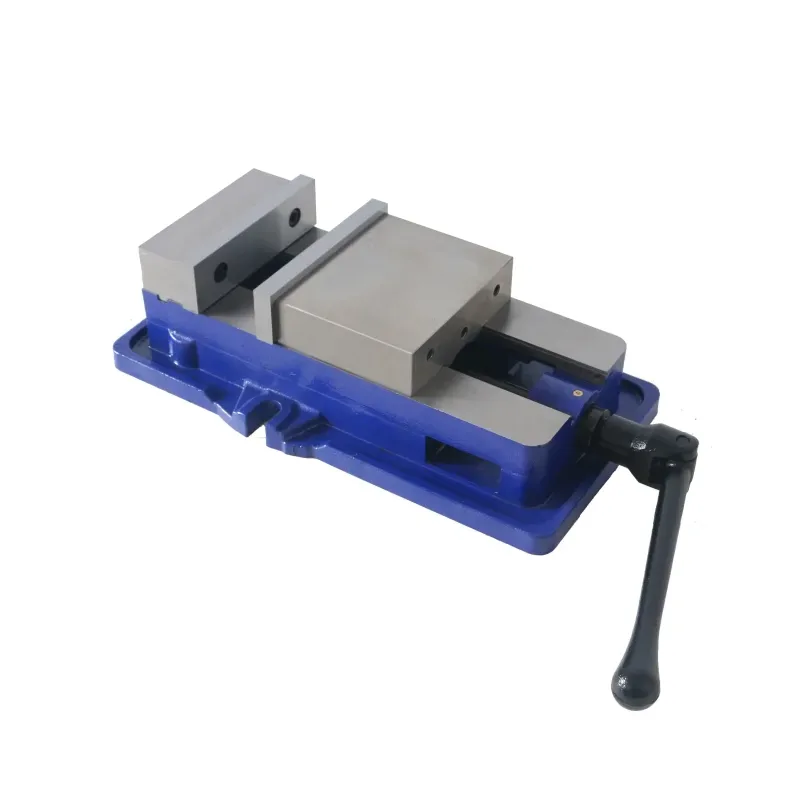 FIG. / PRODUCT VISUAL / 5 VIEWS
Product images are shown for technical review; final compatibility is confirmed before quotation.
TBK-PV-PS-1601034391063
DPV-6-250 precision compact vise
A compact MC vise recorded as DPV-6-250 in nodular cast iron at 45 kg, parallelism 0.02 mm per 100 mm. Every recorded field except the model number is identical to the DYV-6-300 in this catalogue, so the model is the only documented difference.
- Model referenceDPV-6-250
- Weight45 kg
- Parallelism0.02 mm / 100 mm
- MaterialNodular cast iron
- ApplicationCNC machining centre
| Model reference | DPV-6-250 |
|---|---|
| Material | Nodular cast iron |
| Weight | 45 kg |
| Parallelism | 0.02 mm / 100 mm |
| Application | CNC machining centre |
| Usage | Workholding precision vise |
| Colour | Silver |
| Condition | New |
APPLICATION CHECKCNC machining centers and milling-machine workholdingConfirm machine model, interface and drawing before order.
Request this part Ask about an alternativePRODUCT DETAILTECHNICAL INFORMATION
HOW TO READ THE NUMBERSDPV-6-250 0.02 mm / 100 mm 45 kg
Parallelism per 100 mm, not flatness over the whole jaw. A 200 mm jaw can therefore drift up to 0.04 mm end to end even though the specification reads 0.02.
The mass is doing the rigidity work here: a 45 kg casting absorbs interrupted cuts that a 3 kg tool vise would transmit into the part.
WHERE IT DOES NOT FIT
At 0.02 mm per 100 mm it is a production vise, not a gauging fixture. No clamping force, jaw width or opening is recorded, so the part envelope has to be confirmed before the model is chosen.
WHAT THIS RECORD ANSWERS
How is this different from the DYV-6-300?
Only the model number is documented as different. Material, weight, parallelism, colour and application are identical in both records.
Can it hold a 250 mm part?
The model suggests a 250 mm class, but opening is not recorded, so the part size must be confirmed rather than inferred.
Is a swivel base included?
Not recorded. No base type, angle range or swivel feature appears in the specification.
SPECIFICATION INPUT
Exact fit starts with the machine.
Specifications are listed with the part. Confirm machine model, interface, material and drawing before quotation.
INPUT / 2D + 3D DRAWINGCHECK / INTERFACE + MATERIALOUTPUT / QUOTATION ROUTE