A 100 mm jaw width on a 30 kg body: the mass is disproportionate to the size, which is exactly what stops a small vise from ringing during milling.
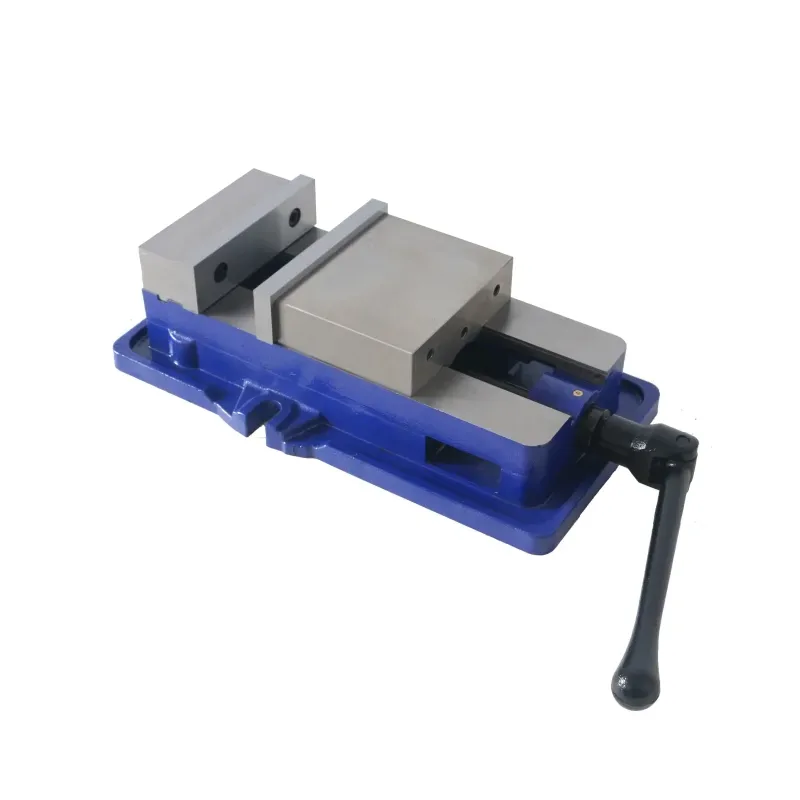 FIG. / PRODUCT VISUAL / 5 VIEWS
Product images are shown for technical review; final compatibility is confirmed before quotation.
TBK-PV-PS-1601031194095
QM16100 4-inch machine vise
A 4-inch machine vise recorded as QM16100 in cast iron at 30 kg, parallelism 0.005 mm per 100 mm, for milling and grinding machine use. The 4-inch figure is the jaw width, which makes it the smallest body in this family despite a heavier casting than the 3 kg tool vises.
- ModelQM16100
- Jaw width4 inch
- Weight30 kg
- Parallelism0.005 mm / 100 mm
- MaterialCast iron
| Model | QM16100 |
|---|---|
| Jaw width | 4 inch |
| Material | Cast iron |
| Weight | 30 kg |
| Parallelism | 0.005 mm / 100 mm |
| Application | CNC machining centre |
| Usage | Workholding precision vise |
| Condition | New |
APPLICATION CHECKCNC machining centers and milling-machine workholdingConfirm machine model, interface and drawing before order.
Request this part Ask about an alternativePRODUCT DETAILTECHNICAL INFORMATION
HOW TO READ THE NUMBERS4 inch with 30 kg 0.005 mm / 100 mm Cast iron, not nodular
Toolroom-grade parallelism on a 4 inch body. Over the full 100 mm jaw the drift is five micrometres, so the specification holds across the whole face rather than only near the screw.
The record says cast iron, while the 45 kg production vises in this catalogue say nodular cast iron. Grey iron is stiffer but more brittle, which is a different trade for a small body.
WHERE IT DOES NOT FIT
It is a 4 inch precision vise: it is not presented for parts wider than the jaw, and a 30 kg body on a small table has to be checked against the table's load and slot spacing. No clamping force is recorded.
WHAT THIS RECORD ANSWERS
Is QM16100 the same family as the Qm16 series?
The naming matches the Qm16 series, but this record carries its own 0.005 mm figure while the series record states 0.025 mm. Treat them as different specifications.
Can it be used on a surface grinder?
The title names milling and grinder machine tools, so grinding use is claimed in the source description.
What is the maximum opening?
Not recorded. Only the 4 inch jaw width is stated.
SPECIFICATION INPUT
Exact fit starts with the machine.
Specifications are listed with the part. Confirm machine model, interface, material and drawing before quotation.
INPUT / 2D + 3D DRAWINGCHECK / INTERFACE + MATERIALOUTPUT / QUOTATION ROUTE