Lower than the 38–45° of a general-purpose end mill. The smaller helix reduces axial force and stiffens the tool, which suits deep roughing passes. Chip evacuation is less smooth than with a high helix, so deep pockets need air blast.
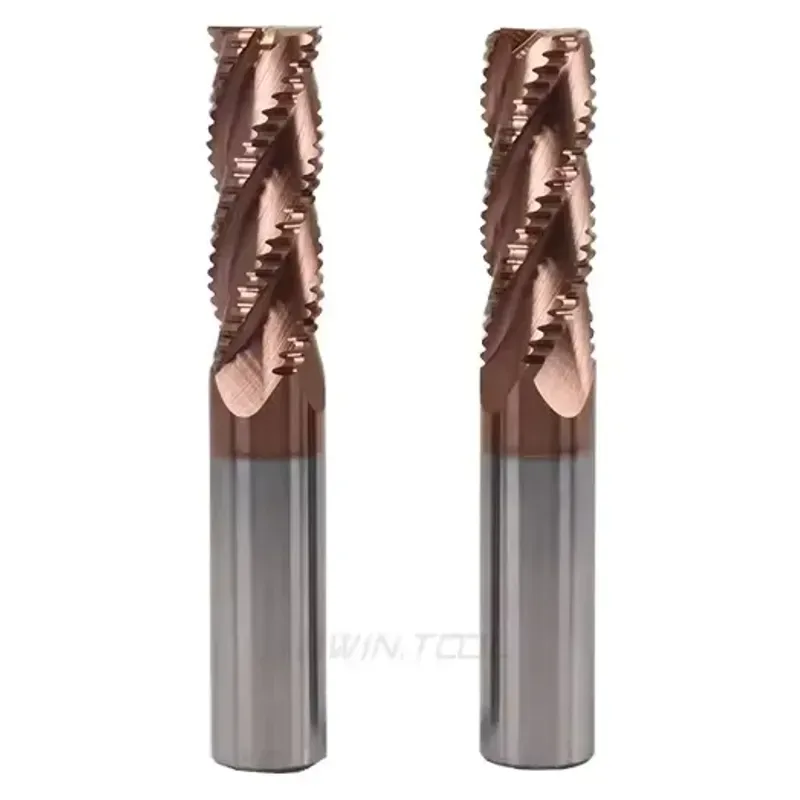 FIG. / PRODUCT VISUAL / 2 VIEWS
Product images are shown for technical review; final compatibility is confirmed before quotation.
TBK-END-60818160149
4-flute roughing end mill
A four-flute roughing end mill in micro-grain carbide with a 35° helix, offered from 4 to 20 mm diameter and in AlTiN, TiAlN, TiN or TiSiN coating. Listed for carbon steel, alloy steel and cast iron on machining centres, gantry mills and manual mills.
- Flutes4
- Helix angle35°
- Diameter4–20 mm
- Cutting-edge length10 / 12 / 16 / 18 / 20 / 25 / 30 / 35 mm
- Grade55 HRC
| Flutes | 4 |
|---|---|
| Helix angle | 35° |
| Diameter | 4–20 mm |
| Cutting-edge length | 10 / 12 / 16 / 18 / 20 / 25 / 30 / 35 mm |
| Substrate | Micro-grain carbide |
| Grade | 55 HRC |
| Coating | AlTiN / TiAlN / TiN / TiSiN |
| Workpiece materials | Carbon steel, alloy steel, cast iron |
APPLICATION CHECKCNC milling machine and machining-center applicationsConfirm machine model, interface and drawing before order.
Request this part Ask about an alternativePRODUCT DETAILTECHNICAL INFORMATION
HOW TO READ THE NUMBERS35° helix 4–20 mm diameter Four coating options
A series range, not one cutter. Roughing selection goes diameter first because it sets rigidity, then edge length because that sets overhang, and coating last.
The same body is offered in four coatings that behave quite differently: TiSiN holds up at high temperature for dry cutting and hard material, TiN is general purpose with less heat resistance. Listing all four means made to order, not four in one.
WHERE IT DOES NOT FIT
A roughing tool, so not for finishing surfaces. Stainless and aluminium are absent from the material list for good reason: stainless work-hardens and aluminium loads the flutes, and both need dedicated geometry and coating.
WHAT THIS RECORD ANSWERS
What helix angle?
35°.
What diameter range?
4–20 mm.
Which coatings?
AlTiN, TiAlN, TiN and TiSiN.
SPECIFICATION INPUT
Exact fit starts with the machine.
Specifications are listed with the part. Confirm machine model, interface, material and drawing before quotation.
INPUT / 2D + 3D DRAWINGCHECK / INTERFACE + MATERIALOUTPUT / QUOTATION ROUTE